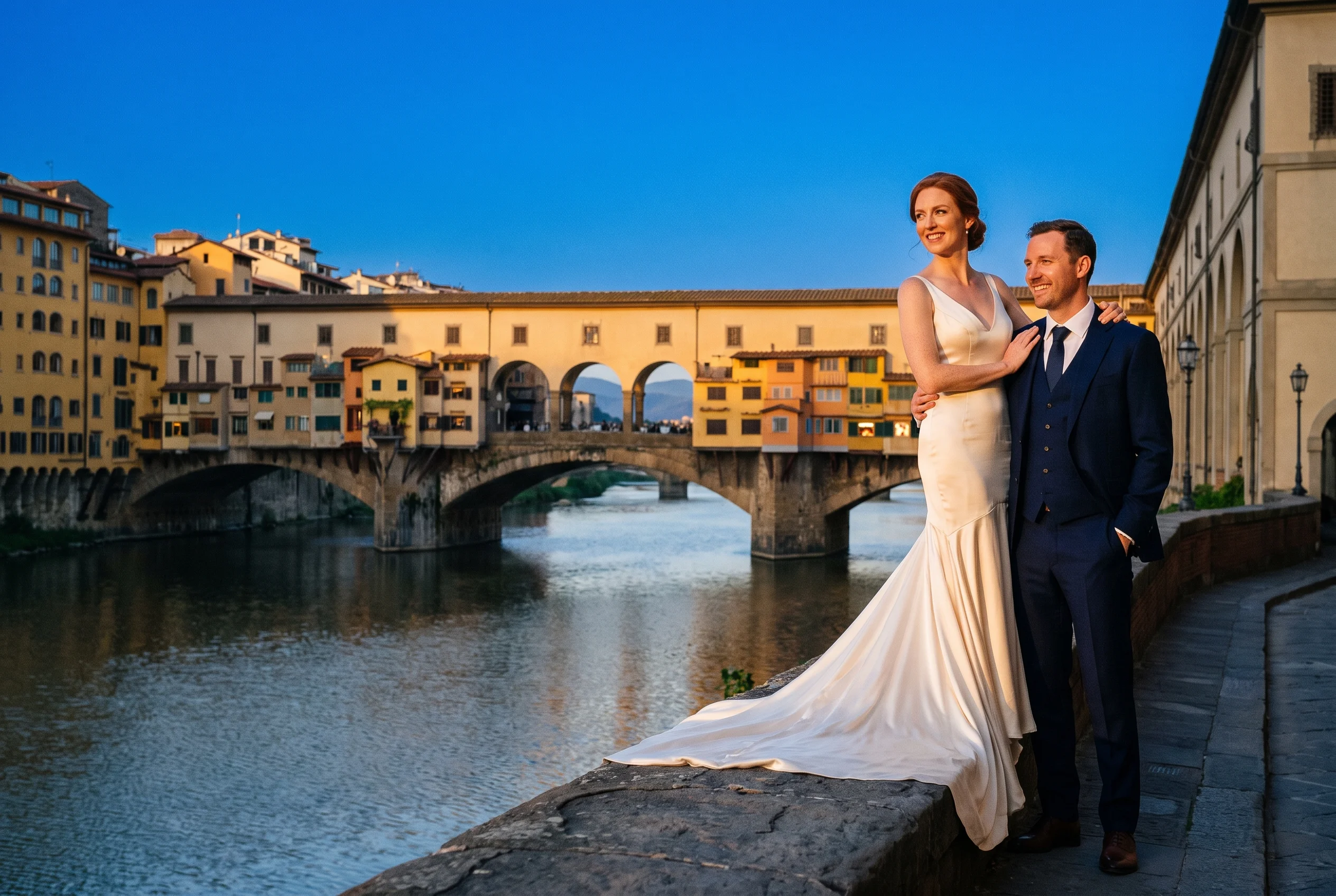
france · Destination Guide
The Color of Paris Light: A France Wedding Photography Guide
Paris at blue hour, Provence lavender fields, and Annecy's alpine lake — discover the France wedding photo spots that most couples never find. An atelier guide to French wedding photography.
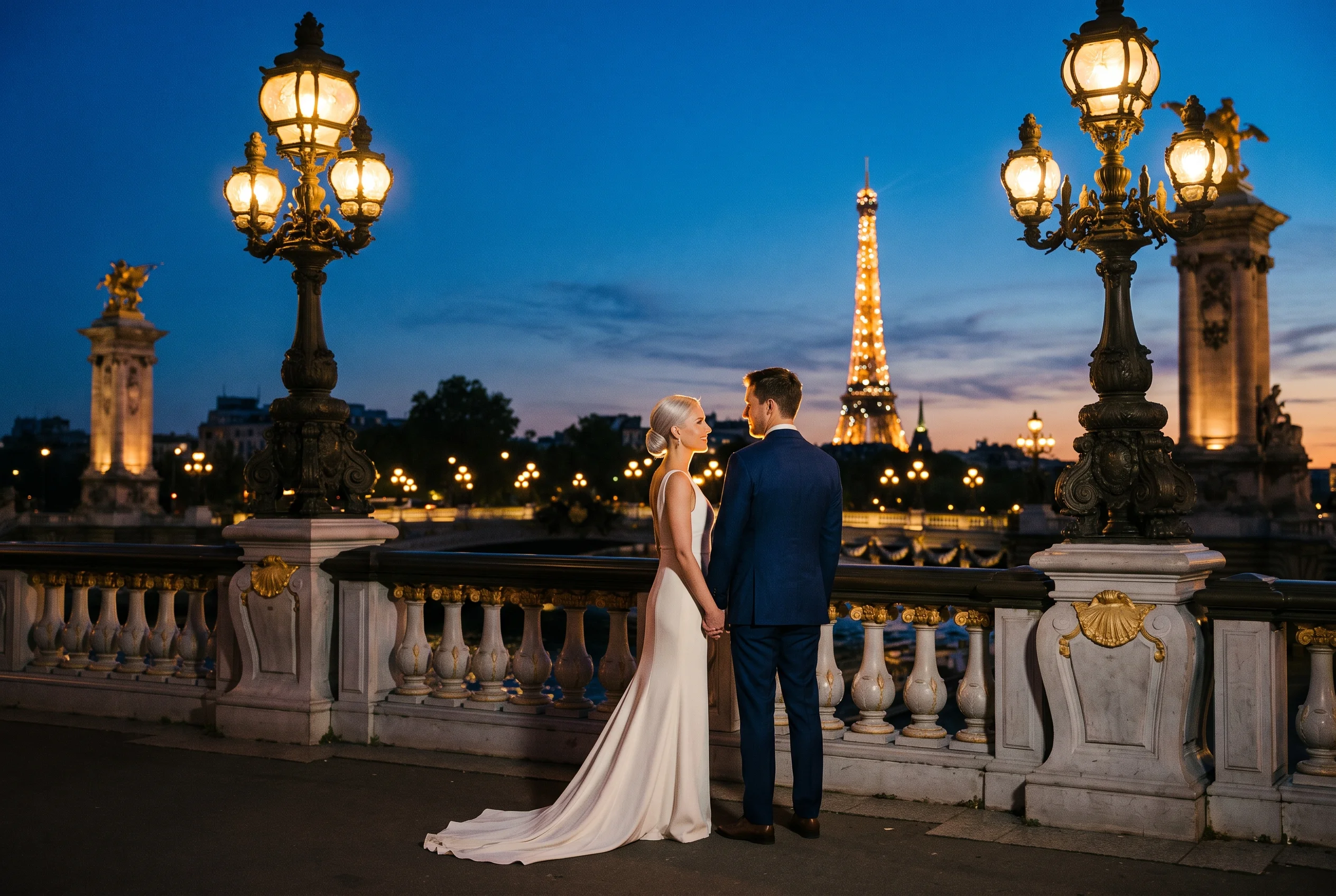
France does not photograph itself — it performs. Light here is not a backdrop but a collaborator, bending through Haussmannian avenues at golden hour, pooling in the courtyards of the Louvre, and dissolving into a cool indigo wash along the Seine as dusk settles. For wedding photography, this matters more than any landmark. The same bridge that looks ordinary at noon becomes cinematic at blue hour; the same lavender field that reads as a postcard in midsummer becomes a sensory portrait at first light.
At Pictaway, our atelier approach means we study these windows, rehearse the timing, and art-direct every frame so your wedding portraits feel crafted rather than captured. This guide is built from real shoots across the country: the spots that consistently deliver, the windows of light that separate a wedding portrait from a snapshot, and the timing discipline that turns a location into an image worth keeping. What follows is not a travel itinerary. It is a lighting calendar and a composition brief, distilled from our archive of French wedding portraits.
Paris — Pont Alexandre III at Blue Hour
Pont Alexandre III is the most photographed bridge in Paris, and most of those photographs are forgettable. The difference between the postcard shot and a wedding portrait that lingers is almost entirely about the clock. By day, the bridge is a crowd — tour groups, buses, and couples queued at the gilded lampposts. The gilded caryatids and gilded detail read flat. The light is harsh and directional in a way that flattens the architecture into tourist documentation.
Blue hour changes everything. Approximately thirty minutes after sunset, the sky over the Seine shifts from amber to a deep, saturated indigo. The bridge's candelabra-style lamps ignite, casting a warm tungsten glow against the cool sky. The Eiffel Tower sparkles on the hour. The river becomes a dark mirror. This is the window — typically twenty to forty minutes wide — where the bridge stops being a landmark and starts being a stage. The color temperature contrast between the warm lamp light and the cool sky is what gives Paris blue hour wedding photography its signature look: cinematic, layered, almost painted.
The hour that matters: Arrive twenty minutes before sunset to compose and rehearse poses. The usable blue hour window is narrow — sometimes as short as fifteen minutes in summer — so every second counts. Position the couple with their backs to the lampposts so the warm light grazes faces rather than flattening them. Use the Seine-facing side of the bridge for reflections; the Invalides-facing side for architectural symmetry. Weeknights are noticeably quieter than weekends.
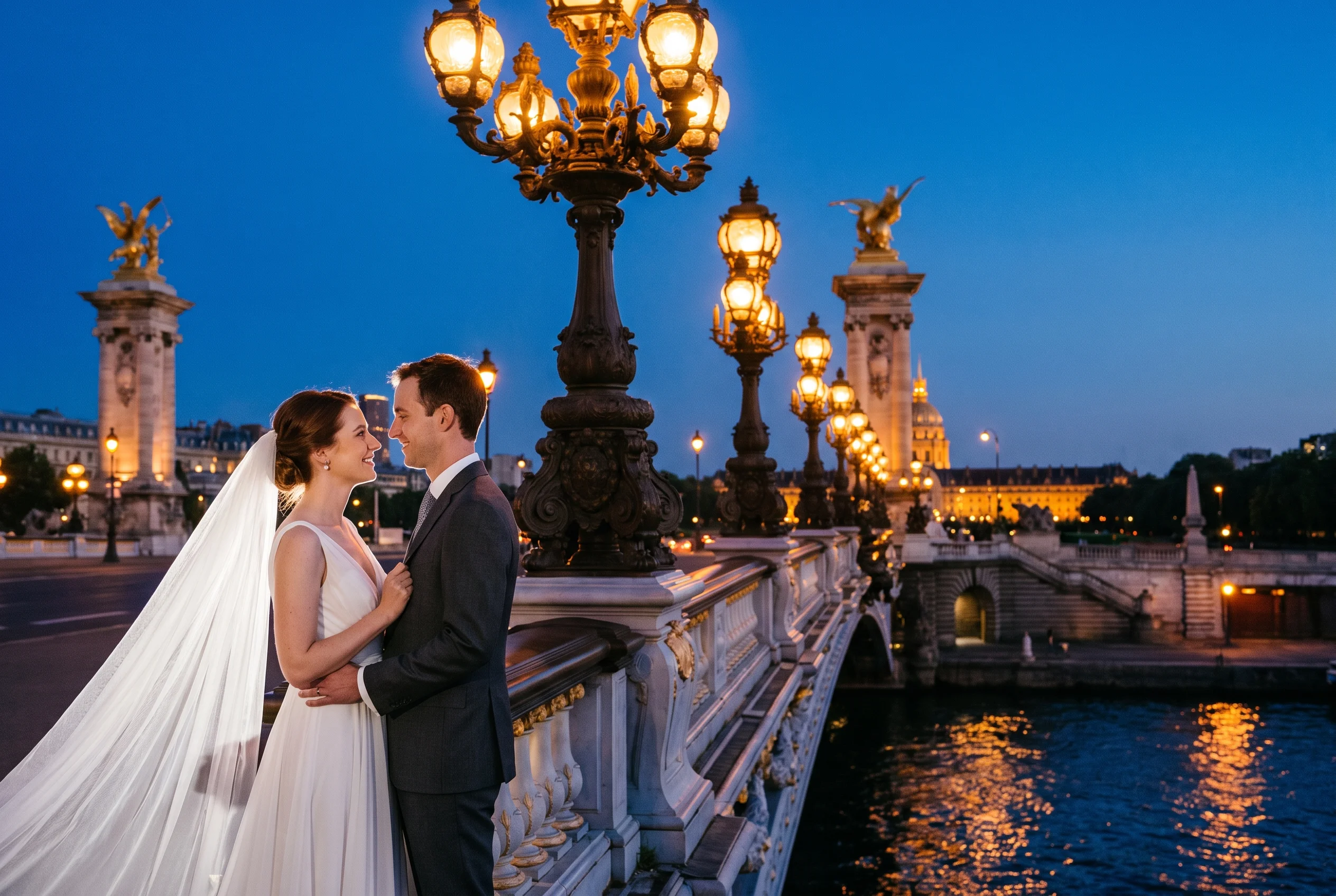
The Louvre Courtyard — Architecture as Softbox
The Louvre courtyard is a lighting instrument. The vast expanse of pale stone — the Cour Napoléon, framed by the palace wings and the glass pyramid — acts as a natural reflector that bounces soft, diffuse light back onto subjects from every angle. This is why wedding portraits here rarely need fill flash, even on bright days. The stone does the work.
The courtyard rewards two distinct windows. Late afternoon, when the sun drops low enough to rake across the colonnade, produces long shadows and warm directional light that gives the pale limestone a honeyed glow. The arcades along the Cour Carrée catch this light beautifully — shooting into the colonnade creates a natural frame and depth that a flat backdrop cannot match. Earlier in the day, the courtyard's open expanse delivers even, shadowless light ideal for full-length portraits and wide environmental shots.
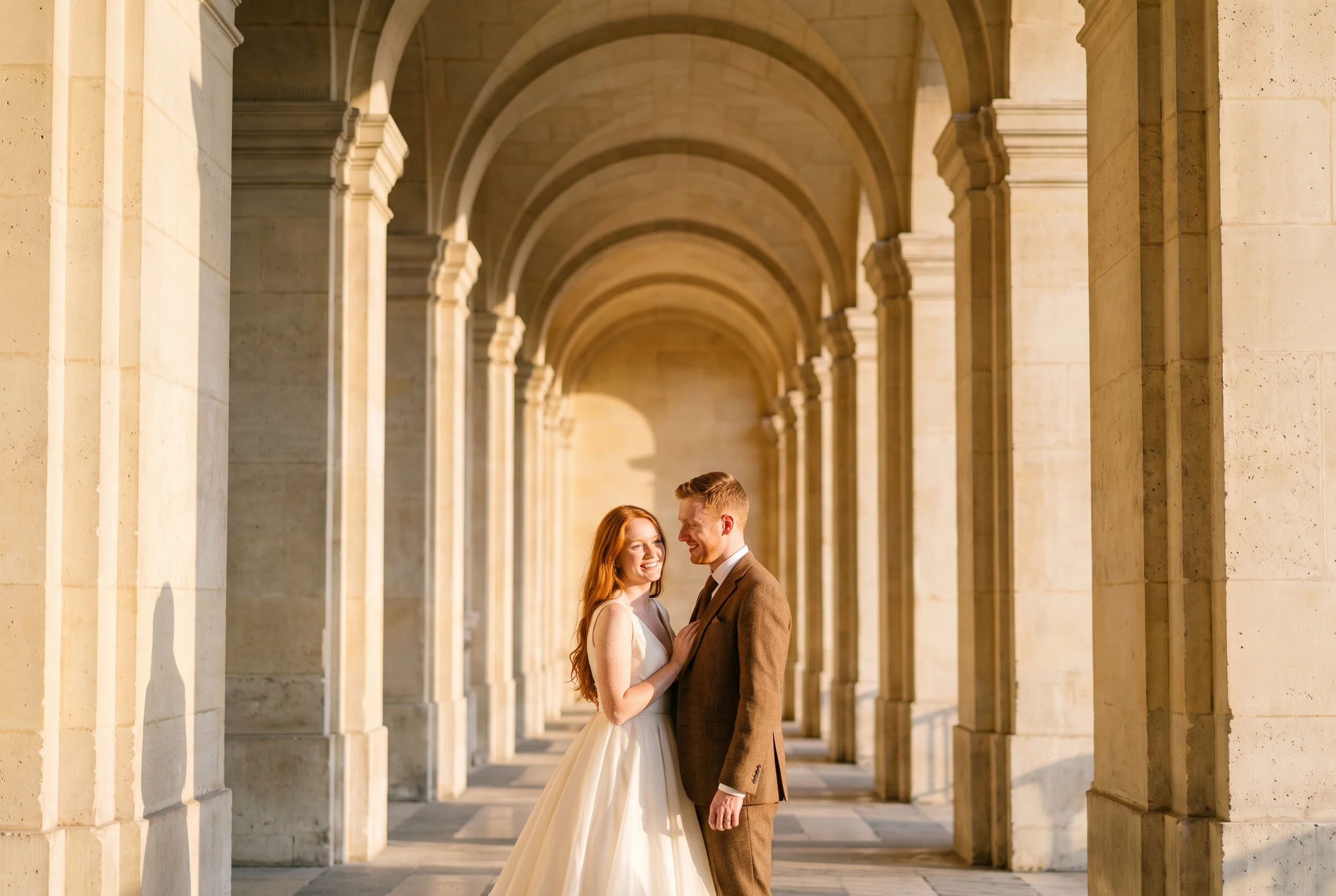
The hour that matters: Late afternoon — roughly ninety minutes before sunset — is the courtyard's golden window. The angle of light hits the western colonnade perfectly, and tourist density begins to thin. The Cour Carrée's arcades offer shelter from direct sun and create dramatic repetitive arches that compose themselves. Avoid midday in summer: the pyramid throws harsh reflections and the stone generates noticeable heat shimmer.
Provence — Lavender Fields in Full Bloom
Provence in late June and early July is not subtle. The Valensole Plateau erupts into violet — miles of lavender rows rolling across rolling farmland under a sky that, at this altitude, runs a deeper blue than the Riviera coast. For wedding photography, this is a seasonal material. Miss the bloom and the location is just farmland; hit it and you have one of the most saturated, color-rich environments available anywhere in Europe.
The craft here is not about finding lavender — it is everywhere. It is about controlling the light so the color does not blow out and the horizon line composes cleanly. Midday sun on lavender produces a magenta wash that reads as overexposed and flat. The window is narrow and early: the hour after sunrise, when dew still clings to the stems and the light is low enough to rake across the rows, revealing texture and giving the fields a dimensional, almost velvet quality. Shooting into the light — with the sun low behind the couple — produces a backlit haze that softens the violet into something luminous rather than garish.
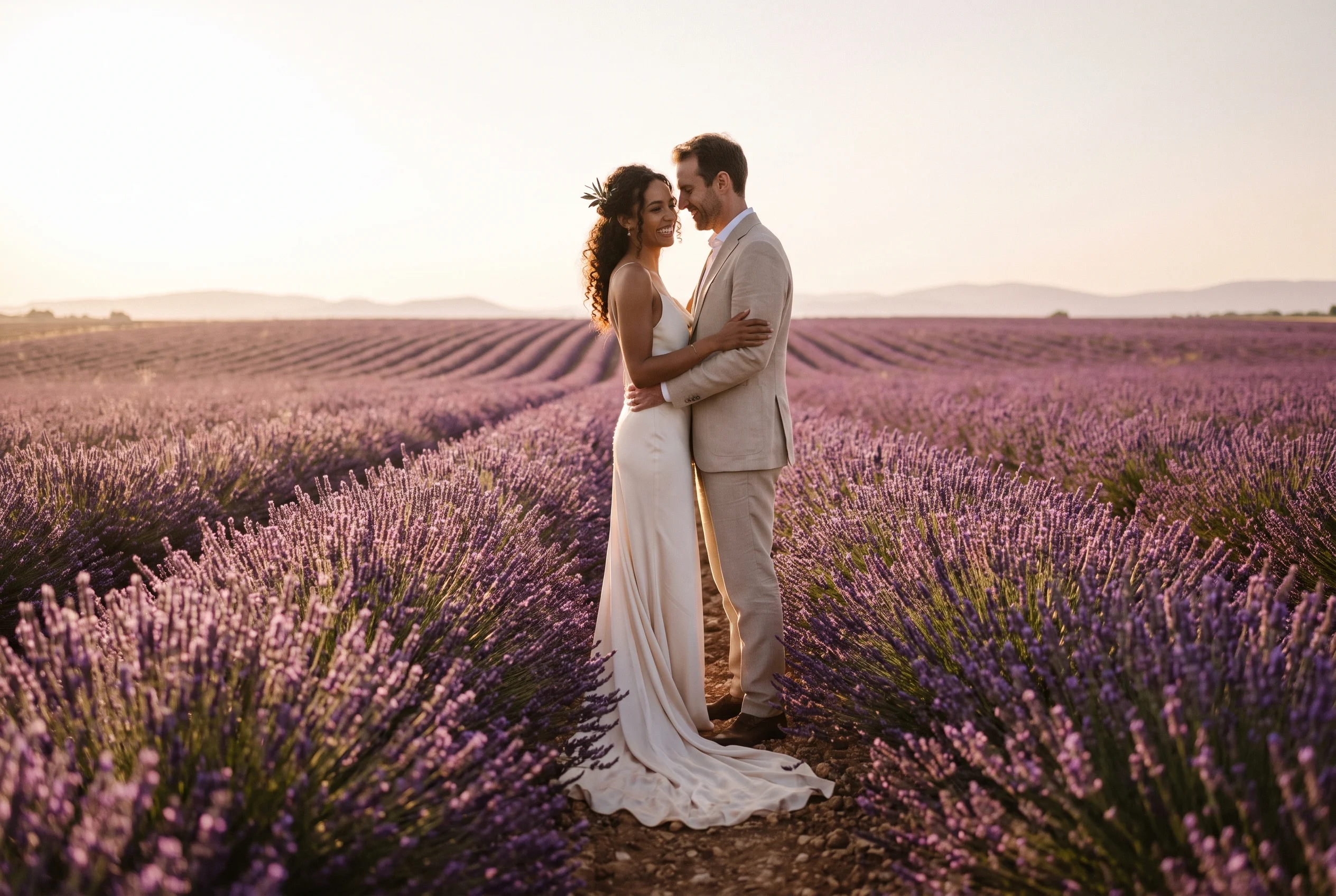
The hour that matters: The Valensole bloom typically peaks from the last week of June through mid-July. Arrive at the fields by 6:00 AM in early July — the light is usable by 6:30 and gone by 8:30. The Valensole Plateau is the most expansive and accessible; Sault and the hills around Séguret offer quieter, smaller fields for couples who prefer fewer witnesses. Always shoot from established farm tracks — the lavender rows are working agriculture, and trampling the plants damages the harvest.
Annecy — The Alpine Lake That Rivals Como
Lake Annecy is what Lake Como would be without the crowds. Fed by alpine springs, the water runs a clarity and turquoise that reads almost tropical in summer, framed by the steep green slopes of the Bornes and Bauges massifs. The old town — with its pastel façades, arched stone bridges, and the Palais de l'Île sitting in the Thiou canal — offers a compact, walkable set of locations that transition from architectural to alpine within minutes.
For wedding portraits, the lake's eastern shore at golden hour is the prize. The mountains behind the western shore catch the last light first, developing a warm pink alpenglow that reflects off the water, while the eastern shore — where couples should stand — remains in soft, diffuse shadow. This split lighting is rare and beautiful: warm background, cool foreground, the couple lit evenly without the squinting that direct sunset causes. The Pont des Amours (Lovers' Bridge) at blue hour offers a quieter, more intimate alternative to Paris — the canal reflects the lamplight and the surrounding peaks hold the last of the dusk.
The hour that matters: June through September offers the most reliable weather, but September is the connoisseur's choice — the lake is at its warmest, the crowds have thinned, and the autumnal light at 7:00 PM rivals anything in Italy. For the alpenglow effect on the western peaks, shoot from the eastern shore (around Annecy-le-Vieux or the Imperial Palace gardens) in the last forty-five minutes before sunset.
Montmartre — The Village Above the City
Montmartre is the only neighborhood in Paris where the city feels like a village. Steep cobbled streets, vine-covered walls, the white domes of the hilltop basilica rising above the rooftops — it is a self-contained world that compresses the romance of Paris into a few walkable blocks. For wedding photography, Montmartre rewards photographers who treat it as an environment rather than a viewpoint.
The hilltop parvis delivers the iconic Paris rooftop panorama, but the more crafted portraits happen in the streets radiating from the summit: the Rue de l'Abreuvoir with its La Maison Rose, the steps of the Rue Foyatier, the narrow alleys off the Place du Tertre where the light funnels between buildings. Montmartre's elevation means it catches the last of the evening light minutes after the rest of the city has gone into shadow. The stone here is warmer than Haussmannian limestone — it reads cream and ochre — and the cobbles add a texture that asphalt cannot.
The hour that matters: Early morning — before 8:00 AM — is the only time Montmartre's most photographed streets are genuinely empty. The Rue de l'Abreuvoir and the steps to the hilltop are overrun by 10:00 AM in season. For evening, the parvis at sunset offers the broadest panorama, but the side streets in the last hour of golden light are where the crafted, intimate portraits live. Avoid the Place du Tertre entirely — the artist-square crowds and buskers make it impossible to work undisturbed.
Frequently Asked Questions
What are the best wedding photo spots in France?
Paris offers iconic spots like Pont Alexandre III at blue hour and the Louvre courtyard, while Provence's lavender fields in June-July and Annecy's alpine lake provide stunning alternatives beyond the capital. Montmartre rounds out the capital with intimate village-scale streets that contrast with the grand boulevards below.
When is the best time for wedding photos in Paris?
April-May and September-October offer soft golden light, mild temperatures, and fewer tourists. Blue hour in Paris occurs approximately 30 minutes after sunset year-round, though the window is narrowest in summer (sometimes fifteen minutes) and most generous in spring and autumn.
Where are the best lavender field wedding photos in Provence?
The Valensole Plateau in Provence offers the most expansive lavender fields, typically in full bloom from late June to mid-July. Sault and Séguret offer quieter alternatives. The key is arriving at first light — midday sun flattens the color and the heat makes posing uncomfortable.
France rewards photographers who treat light as a collaborator rather than a condition. The Pont Alexandre III at blue hour, the Louvre courtyard's reflective stone, Provence's seasonal lavender, Annecy's alpine clarity, and Montmartre's village warmth — each is a distinct material that, in the right window, composes itself. At Pictaway, our atelier approach means we study these windows, rehearse the timing, and art-direct every frame so your wedding portraits feel crafted rather than captured. Your France wedding portraits — delivered in 24 hours.
Your France wedding portraits — delivered in 24 hours
Get started